
The global travel landscape is evolving faster now than any time in the past decade, and adventure travel is both the testing ground and the beneficiary of this shift. Across consumer trend reports, tour operator forecasts, and media analyses, seven themes consistently emerge.
Together, they reveal an industry where personal wellbeing, hyper-individualization, regenerative principles, and cultural curiosity increasingly drive demand. Drawing on the Adventure Travel Trade Association’s (ATTA’s) recent consumer market research, along with leading 2026 trend reports, industry intelligence, and recent media coverage, the sections below connect the dots and outline how these forces will meaningfully shape adventure travel in the year ahead.
1. The “Decision Detox:” Travelers Want Less Planning, More Presence
The Lemongrass 2026 Travel Trend Report documents a sharp rise in “decision-free getaways,” driven by widespread cognitive fatigue and emotional overload—particularly among women balancing professional, family, and caregiving roles. Euromonitor reinforces this dynamic through its “Comfort Zone” consumer trend, noting that two-thirds of consumers are actively seeking ways to simplify their lives and reduce stress through curated, low-friction choices.
This preference is echoed across the wider travel industry. Airbnb, Arival, and Phocuswright all point to growing expectations for frictionless booking, fewer choices, and higher trust in expert curation. Phocuswright also highlights that travelers increasingly reward brands that remove complexity and make customization simple.
What it means for adventure travel:
- Fully curated, worry-free itineraries—gear included, logistics handled, meals and transfers pre-arranged—become a clear competitive advantage.
- “Show up and go” adventure formats position guides, operators, and local experts as decision-makers, not just facilitators.
- Wellness-infused adventure (expert-led treks, restorative expeditions, structured downtime in nature) aligns directly with decision-detox demand.
- Travelers are looking to incorporate some unscheduled time for exploring and having serendipitous experiences.
In 2026, the adventure traveler increasingly wants to outsource complexity and reclaim mental space.
2. Secondary Destinations Go Mainstream
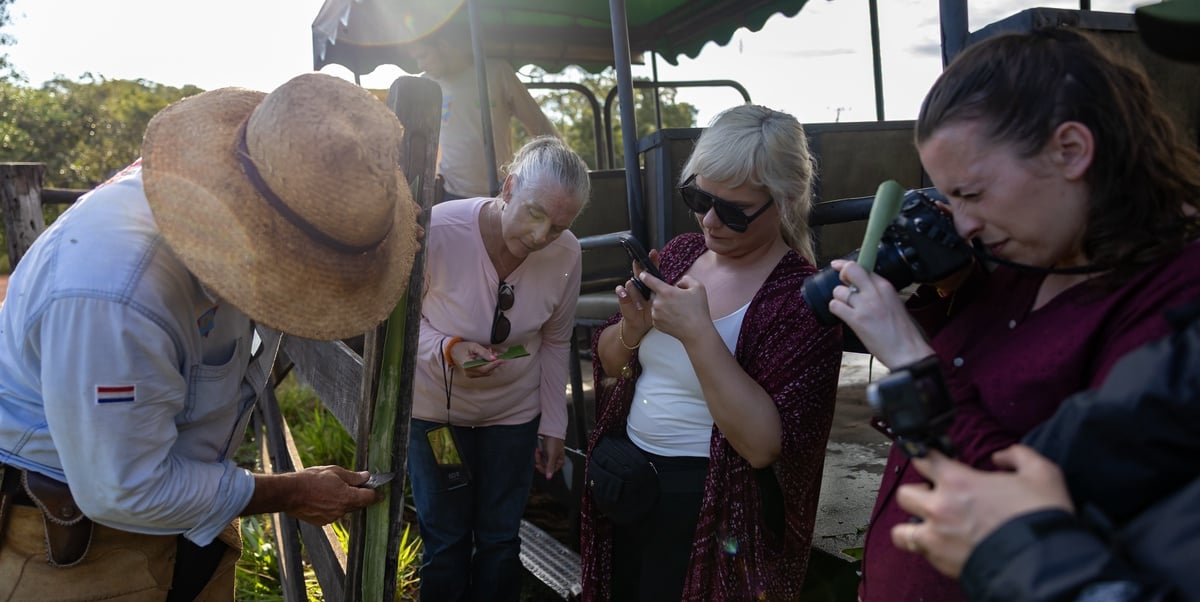
Lemongrass frames this shift as “Untrending Is the New Trendy,” noting that travelers are actively moving away from algorithm-driven hotspots toward quieter, less mediated places. Skift’s reporting adds geographic nuance: while overtourism backlash dominates headlines in parts of Europe, the Middle East and North Africa are notably not experiencing the same resistance, thanks to newer infrastructure, clearer tourism strategies, and stronger alignment between visitor growth and local benefit.
At the same time, Skift and BBC reporting highlight growing friction around travel to the United States—visa delays, border unpredictability, and political polarization—pushing international travelers toward alternative destinations perceived as more welcoming or predictable. Recent Skift data showing a decline in U.S. inbound travel in November 2025 reinforces this redirection of flows.
This dovetails with Airbnb’s observation that travelers seek “unexpected places” and with Arival’s data showing increased demand for quieter, more culturally grounded experiences. ATTA’s 2025 Trends & Insights research also shows Northeast Asia, Scandinavia, and Southern Africa as trending destinations.
What it means for adventure travel:
- Adventure operators are uniquely positioned to design itineraries that intentionally distribute visitors into communities that want tourism—supporting stewardship while mitigating strain. Now is the time to highlight this in marketing and communication materials.
- Secondary cities, rural regions, wilderness corridors, and shoulder-season itineraries are poised for accelerated growth.
- Less-visited regions across Africa, Southeast Asia, Central Asia, and interior South America gain visibility as travelers rebalance risk, value, and authenticity.
Adventure tourism’s long-standing “beyond the obvious” ethos increasingly becomes the blueprint for global visitor management.
3. Luxury Reimagined: Depth, Not Decadence
Skift’s “Luxury Travel Will Get Bigger” analysis underscores a global truth: luxury demand is rising, but today’s luxury traveler wants profound experience over material excess. This is echoed in Backroads’ and BBC’s reporting on “experience-led travel,” Meanwhile, Skift’s 2026 Megatrends show:
- Asia’s luxury resurgence will reorder global travel power dynamics, driven by discerning, experience-hungry travelers.
- Africa is emerging as the next frontier of luxury, supported by conservation-based, community-rooted, high-end products.
Part of this evolution is a fundamental shift in how luxury travel is discovered in the first place. Recent Skift analysis shows that AI-powered discovery—through generative search, conversational tools, and recommendation engines—is rapidly reshaping how high-end travelers find, evaluate, and trust travel brands. For luxury and premium adventure operators, this raises the stakes: visibility is no longer driven solely by brand recognition or traditional marketing channels, but by clarity of narrative, authority signals, and the ability to articulate experiential value in ways AI systems can surface and validate. As discovery becomes more conversational, the luxury brands that win will be those that communicate depth, credibility, and meaning—not just aspiration—at every digital touchpoint. It takes more than pretty pictures to lure travelers in; content needs to appeal to AI tools as well to appear in search results.
What it means for adventure travel:
- Luxury travelers increasingly seek transformational adventure: expert-led trekking, conservation-driven safaris, culinary fieldwork, and deep cultural immersion.
- Premium adventure products expand rapidly in Africa, Japan, Southeast Asia, and Central Asia.
- Operators who combine comfort with authenticity—sometimes described as “curated risk”—are best positioned to capture this demand.
Luxury adventure is no longer niche; it’s a fast-growing component of experiential travel.
4. Experiential Retail & Cultural Immersion Become Core Trip Drivers
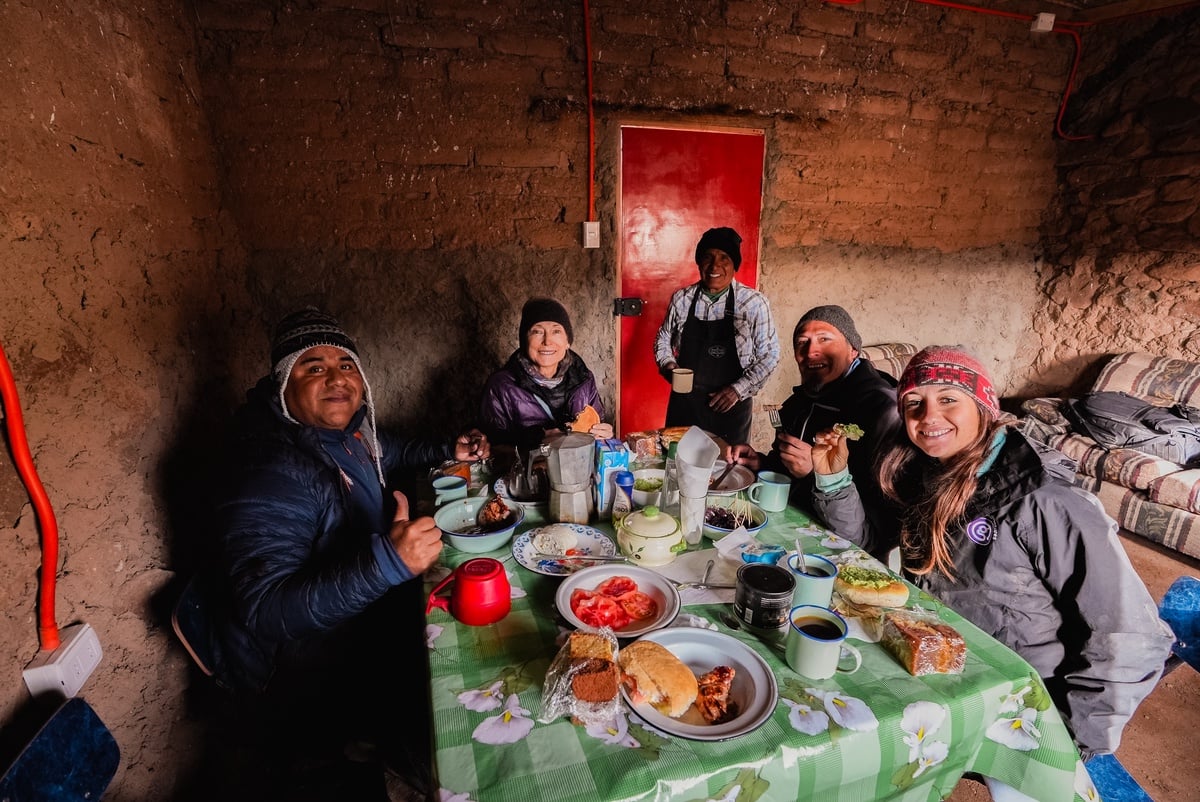
Skift’s Megatrends revealed that experiential retail is one of travel’s biggest untapped assets. Travelers crave hyper-local immersion: markets, artisan studios, food halls, outdoor gear co-ops, maker spaces, and neighborhood pop-ups. This aligns with Arival’s finding that tours and activities emphasizing culture and community continue to outperform. This push toward “realness” also intersects with media coverage on AI-generated content and influencers, including recent New York Times reporting that highlights growing skepticism toward synthetic or overly curated travel inspiration. As digital trust erodes, travelers increasingly value tactile, place-based experiences.
What it means for adventure travel:
- Trips will increasingly include curated cultural marketplaces, from textile cooperatives to community-run food labs. This means in part that adventure companies are going to experience more mainstream travel competition as even the off-the-shelf mass travel operators try to bring more adventure-type content into their offerings. Adventure companies may find themselves having to dig deeper for those 'off the beaten path' experiences that are commercial-ready and also develop business partnerships with those providers that have enough incentives to keep them from sharing too widely.
- Purposeful purchasing — souvenirs with a story — becomes part of the experiential fabric.
- Local artisans, chefs and musicians become educators and co-hosts within itineraries.
Adventure is no longer just about landscapes - it’s about people, craft, and context.
-large.png)
5. Beyond Sustainability: Regeneration Takes Center Stage
Lemongrass is blunt in its assessment that sustainability rhetoric alone is no longer sufficient; travelers want evidence of impact and systems-level change. Euromonitor complements this by showing declining consumer confidence in individual impact, paired with stronger expectations that institutions and brands will lead responsibly.
What it means for adventure travel:
- Operators must demonstrate regenerative practice through community partnership, biodiversity protection, cultural continuity, emissions mitigation, and transparent storytelling.
- Travelers—especially younger demographics and luxury segments—will increasingly select brands that can show measurable contribution, not just well-intentioned sustainability practices.
In 2026, the most trusted adventure operators will be those that invest as much in place-making as in profit-making.
6. Global Geopolitics Are Actively Reshaping Travel Flows
Travel is becoming more political, not less. Lemongrass identifies rising traveler anxiety around borders, governance, and ethics, while Skift and BBC reporting show how national sentiment—particularly toward the U.S.—is influencing destination choice in real time. Canadian outbound travel patterns, for example, increasingly favor Europe, Asia, and domestic alternatives over U.S. trips.
Meanwhile, PhocusWire underscores how tours and activities—often local, flexible, and lower-risk—are more resilient during periods of global uncertainty.
At the same time:
- Asia’s luxury resurgence signals rising regional travel self-sufficiency.
- Africa’s positioning as a frontier for high-end travel reshapes long-haul patterns.
- European rail growth and sustainability regulations continue shifting intra-European travel behavior.
What it means for adventure travel:
- For U.S.-based operators, shifting outbound markets increasingly means re-engineering business models; for example, building locally relevant itineraries, pricing, and partnerships in non-U.S. destinations accounts for shifting sentiment toward American travel.
- Adventure growth will accelerate in Africa, Japan, Southeast Asia, and South America, where demand, investment, and perception are trending positive. Northeast Asia (including Japan) is the #1 trending destination in ATTA’s 2025 Trends & Insights report.
- Operators must adapt quickly to shifting traveler sentiment - both opportunity and risk.
This is a realignment moment. Adventure companies that diversify geographically will hold strategic advantage.
7. Wellness Goes Wild: From Saunas to Darkness to Longevity
Lemongrass highlights radical rest, darkness retreats, sauna culture, and nocturnal wellness as fast-moving trends. Euromonitor’s “Rewired Wellness” adds a complementary layer: travelers increasingly seek clinical-grade, tech-enabled wellbeing, from sleep science to longevity optimization.
What it means for adventure travel:
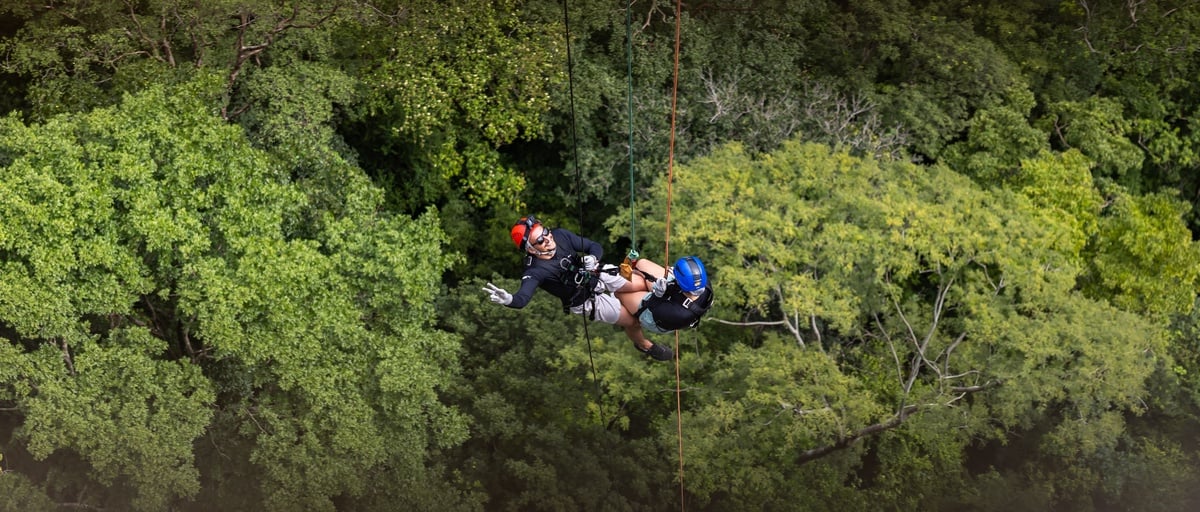
- Expect growth in trek-plus-sauna, kayak-plus-cold immersion, summit-plus-sleep science, and desert darkness retreats.
- Midlife women—one of the fastest-growing, highest-spending segments—drive demand for wellness-infused adventure.
- Recovery programming, intentional rest days, and nature-as-therapy design become differentiators.
Wellness is no longer an add-on; it is a core motivator for adventure travelers.
Conclusion: Adventure Travel Is Becoming the Model for the Future of Tourism
Across these seven trends, a pattern emerges: Adventure travel is no longer a small niche, it is the prototype for where global travel is heading. Former Secretary General - UNWTO, Taleb Rifai said, “There is no future for travel and tourism if you’re not welcomed and embraced by the local community." This is true now more than ever.
Decision-detox itineraries, secondary destinations, regenerative practices, culturally grounded experiences, and wellness-driven journeys reflect a new travel logic—one shaped by meaning, simplicity, and connection. As travelers become more discerning and more values-driven, adventure travel’s long-standing principles are becoming the industry’s north star.