
HX Expeditions, the world’s first and longest-running expedition cruise company, has concluded a landmark season that brought thousands of guests closer to the region’s wildlife, landscapes, communities and science across 31 Arctic sailings.
The programme carried special significance in HX’s 130th-anniversary year. In 1896, its first Svalbard voyage brought together guests, scientists and biologists eager to understand the Arctic. Now in 2026, HX carried that idea forward at far greater scale, combining deep polar expertise with citizen science, university-backed learning and practical action across the region.
- 31 Arctic sailings, welcoming thousands of guests on expedition journeys and achieving an average Tripadvisor rating of 4.7 out of 5 across 167 reviews
- HX’s highest-ever suite bookings, signalling strong demand for premium expedition travel
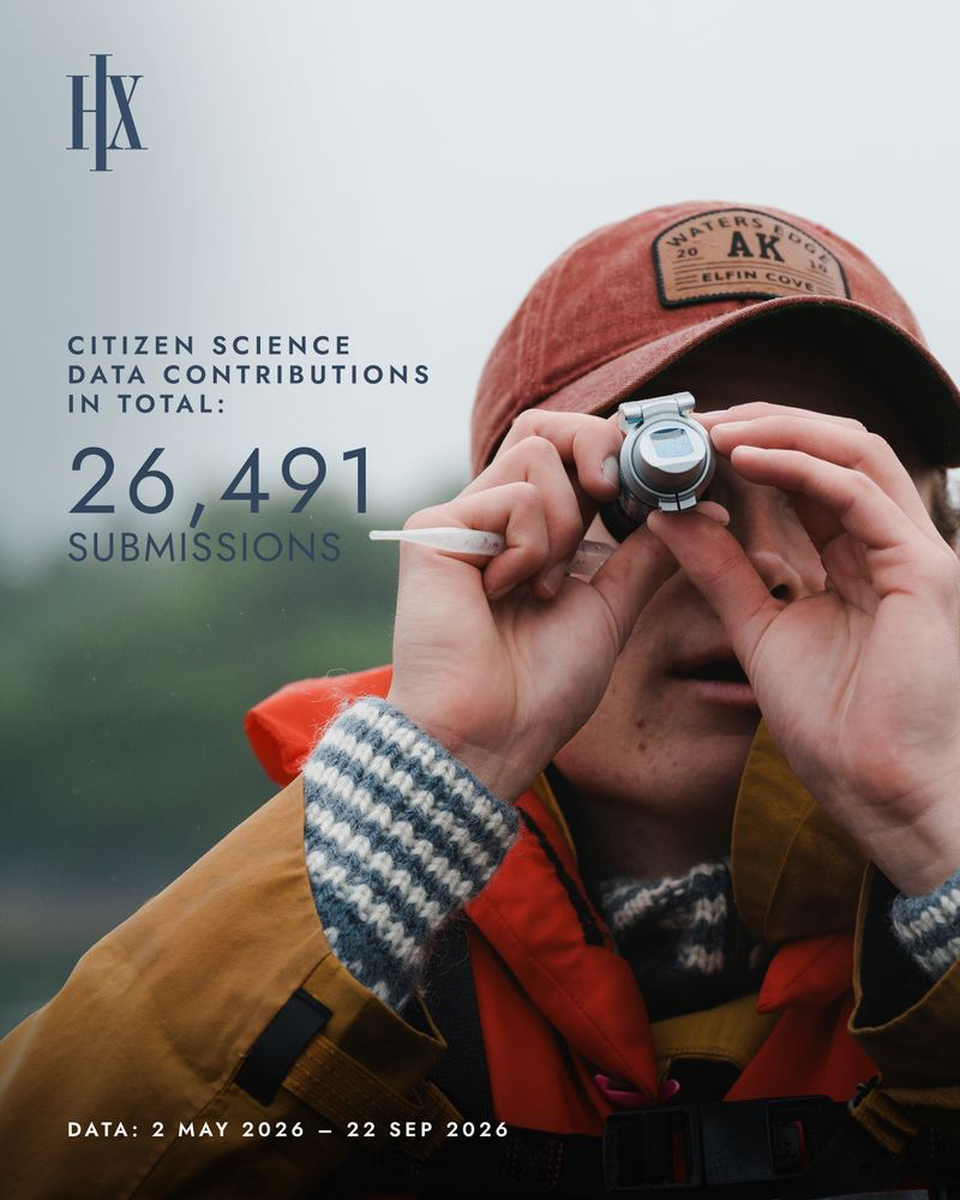
- 26,491 citizen science submissions across nine research programmes
- 363 science boat sessions, connecting guests directly with research in the field
- A world-first Arctic AI whale-detection trial aboard MS Fram, advancing real-time monitoring in polar waters
- 308.44 kg of waste collected through beach clean-ups by guests and staff
Exploration that Contributes to Understanding
Science was not an add-on to the season; it was part of the expedition itself. HX engages guests in at least two citizen science projects on every voyage, helping researchers gather observations from remote places while giving travellers a closer understanding of the environments they explore. Across this Arctic programme, guests and expedition teams recorded wildlife, ocean clarity, cloud cover and aurora activity, supported by 363 dedicated science boat sessions.
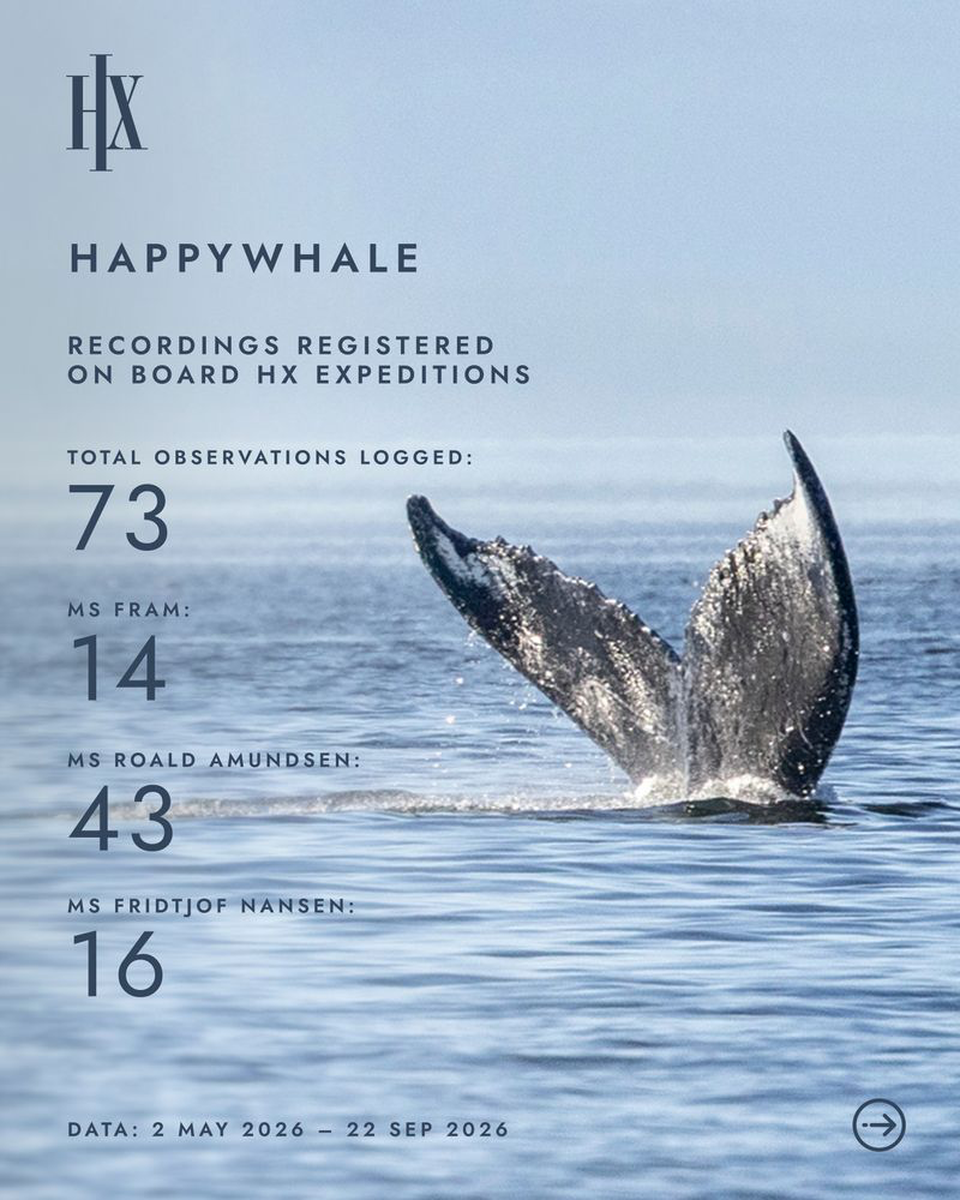
The 26,491 submissions included: 23,518 iNaturalist observations, 1,286 ORCA records, 1,183 eBird submissions, 203 NASA GLOBE Cloud Observer reports, 181 Secchi Disk readings, 73 Happywhale contributions, 38 harmful algal bloom observations, eight Aurorasaurus reports and one Marine Debris Tracker entry.
World-first AI Trial Brings New Eyes to Arctic Whale Protection
Another science milestone for HX came through AI WAVE (Whales and Arctic Vessels) project, an innovative collaboration between Heriot-Watt University and marine monitoring specialist Seiche. The partners deployed a Smart Visual Detection System aboard MS Fram in a world-first Arctic trial of thermal imaging and artificial intelligence for real-time whale detection. The trial began on MS Fram’s voyage from Dover to Svalbard and continued throughout the Arctic summer, gathering data around the archipelago.
Designed to identify whale blows and surface activity, the system combines thermal cameras, high-definition imagery, machine learning and continuous monitoring. The data collected will help train future AI-assisted species identification and automated alert systems, potentially giving bridge teams earlier warning of whales and reducing disturbance and collision risk for Arctic species including narwhal, beluga and bowhead whales. The project also serves as a blueprint for how science, shipping, and technology partners can develop scalable tools for safer, more sustainable operations in sensitive waters.
Dedicated HX and UTAS Arctic Learning for All Guests
The season also extended learning beyond the ship. HX’s new free Svalbard course, developed with the University of Tasmania, uses expert-led modules to introduce guests to the archipelago’s wildlife, ecosystems, history and the principles of responsible exploration before they travel.
The course follows HX’s Alaska course and award-winning Antarctica programme, with further learning planned for Arctic Canada, Greenland, Iceland and the Northwest Passage in 2027.
HX Extends Greenland Promise Through the End of 2028
Alongside its Arctic season results, HX has announced that the HX Greenland Promise will be extended through the end of the 2028 season.
Launched to give guests and travel partners greater confidence when planning Greenland expeditions, the Promise provides flexible options if HX cancels a qualifying Greenland sailing or a guest’s government advises against travel. Guests can either transfer to another HX expedition and receive an additional 20% Future Cruise Credit or choose a full refund. The extension builds on the protection already offered for 2026 and 2027 voyages and now provides the same reassurance for guests planning Greenland expeditions through 2028. Terms and conditions apply and more details will be posted on the Travelhx.com website in the weeks ahead.
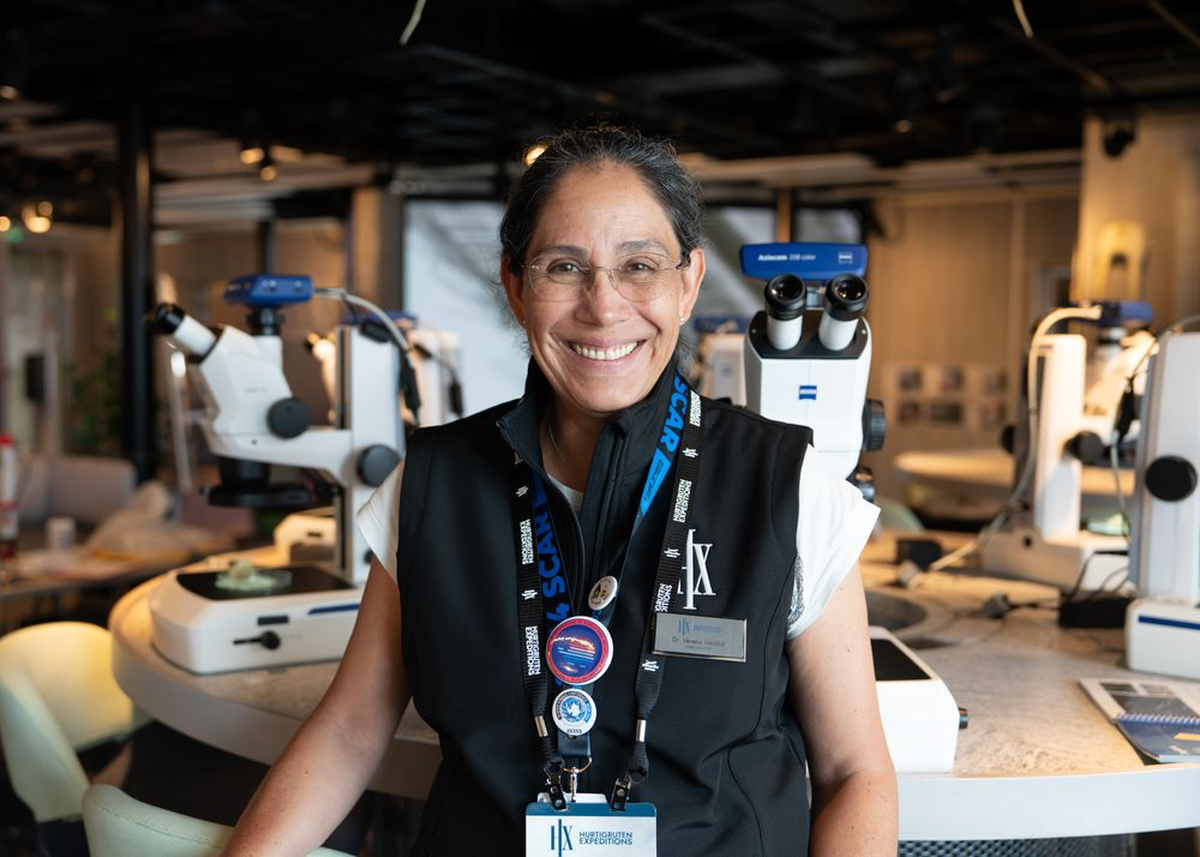
Dr Verena Meraldi, HX Chief Scientist concluded: “Science is one of the most powerful ways to turn an Arctic journey into something that matters long after guests return home. From 26,491 citizen science submissions to a world-first Arctic trial using AI and thermal imaging to detect whales, this season shows what becomes possible when operators, research and educational bodies, technology partners and guests truly work together. It's travelling with a purpose. As the region’s largest expedition cruise operator, we have a responsibility to pair our scale and years of experience with meaningful participation to create a deeper understanding of how we can protect the Arctic of the future."