
For many adventure travel operators, selling the trip is the easy part. Delivering it across multiple days, suppliers, vehicles, guides, and shifting customer needs is where complexity multiplies. That was the focus of a recent Tourpreneur webinar featuring Al Check, co-founder of Odyssey multi-day tour software, in conversation with Tourpreneur’s Peter Syme. Drawing on decades of operational experience, the two unpacked the structural weaknesses that continue to challenge multi-day operators and outlined what smarter system design looks like in practice.
Selling Is Simple. Delivery Is Complex.
Front-end booking systems are well established: generating interest, capturing decisions, and processing payments. But multi-day touring adds layers of operational complexity like overlapping departures, supplier confirmations, staff scheduling, logistics, and capacity management, that quickly overwhelm spreadsheet-based workflows. Without integrated back-end systems, operators often juggle disconnected tools and manual processes. Booking technology captures revenue; operational systems protect it.
Growth Reveals the Cracks
Check observed that growth doesn’t create chaos - it exposes it. One departure per week is manageable, but as tours overlap, pressure builds. Teams become reactive, service quality drops, and the instinctive response is to hire more staff rather than fix structural inefficiencies. Operators who invest in systems early can scale bookings without proportionally increasing headcount; some have quadrupled customer numbers with minimal additions to reservation teams because workflows were already structured.
The Power of a Single Source of Truth
Many multi-day operators operate fragmented tech stacks: itineraries in Word, pricing in spreadsheets, customer details in CRM, and supplier notes buried in email threads. Check suggests that Operators consider their products as a structured “containers” that includes itinerary, pricing, supplier details, logistics, and customer data in one centralized system. Different teams may require different views, but all should draw from the same source, reducing duplication, miscommunication, and operational risk.
Rethinking Product Design
Custom itineraries often feel inherently complex, yet many are variations on a core structure. By building master products and cloning scheduled departures from them, operators can streamline seasonal updates, pricing changes, and supplier adjustments. This approach preserves flexibility across guided, self-guided, FIT, and group formats while reducing administrative burden and improving scalability.
Learn more about the Odyssey Multiday Software smart transition program here
Communication as an Operational Engine
Communication breakdowns are one of the costliest operational pain points. Suppliers require accurate rooming lists and dietary details by fixed deadlines as missing confirmation windows can trigger penalties, while guides and operations teams need current client information when changes occur. When communications are manually assembled from scattered systems, errors and inefficiencies multiply.
Structured templates tied directly to operational data, combined with visibility into what has been sent and read, significantly reduce friction. Mapping customer and supplier communication journeys in advance creates consistency and minimizes reactive emailing.
Logistics: Where Margins Are Won or Lost
Multi-day touring is fundamentally about the movement of people, vehicles, luggage, and equipment. A simple date change can cascade into vehicle swaps, guide reassignments, and capacity conflicts. As tour volume increases, informal coordination tools struggle to keep pace.
Centralized scheduling systems, manifest-style outputs, and real-time visibility reduce stress and protect margins. Even operational details such as standardized luggage labeling reinforce professionalism while streamlining workflows.
Managing Teams in Motion
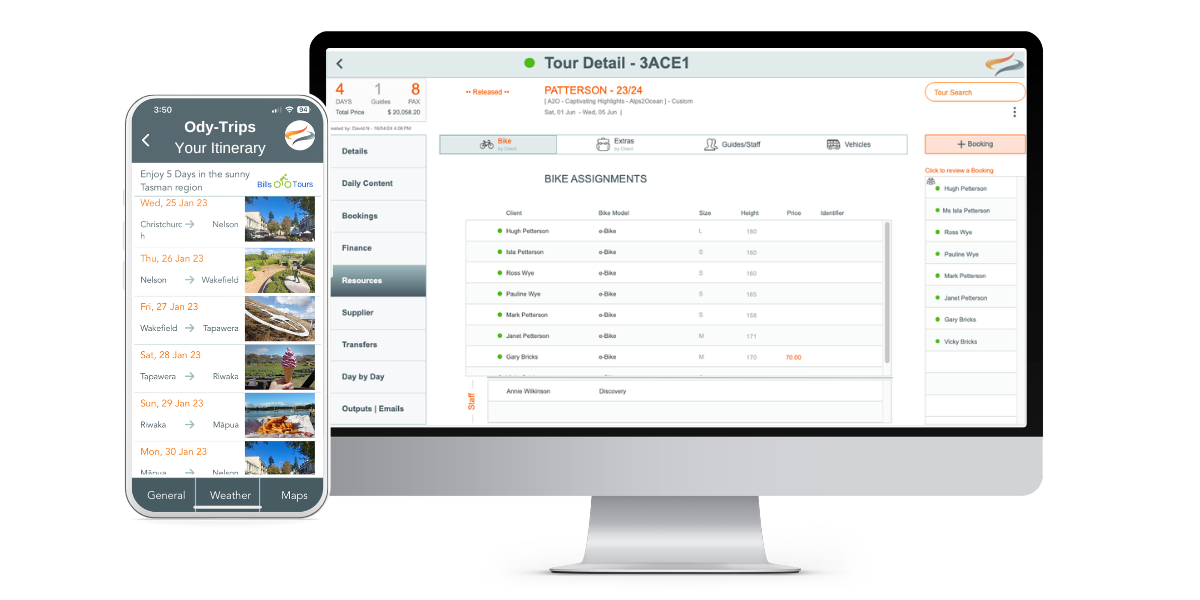
Adventure tour operations depend on guides, drivers, mechanics, and support staff. Coordinating schedules across overlapping departures without clear visibility creates confusion and constant interruptions for managers.
Dashboards and priority indicators that highlight live, current, and upcoming tours provide immediate clarity, helping teams focus on delivery rather than scrambling for information.
Meeting Modern Customer Expectations
The 50-page PDF roadbook remains common in the sector, yet today’s travelers expect mobile-first information. Digital itineraries pushed to mobile apps, including supplier details, maps, and pre-trip briefings, align more closely with modern behavior. Integrating mapping and weather tools enhances self-guided experiences , and voice-enabled AI support can provide real-time answers during the trip.
Learn more about the Odyssey Multiday Software smart transition program here
AI: Structure Before Automation
AI presents clear opportunities, from chatbots in sales to automated content workflows and enhanced reporting. However, Check emphasized that AI depends on structured, centralized data. Without clean data architecture, automation introduces more inconsistency rather than less.
Technology at the Right Stage
Both Check and Syme acknowledged that timing matters. For early-stage operators, sales and marketing remain the primary focus. As volume increases, operational strain makes structural gaps more visible. Systemizing repeated tasks, even within spreadsheets, is a practical starting point, with more advanced systems introduced as scale demands.